

Understanding Airbnb Regulations in Calgary: A 2026 Guide for Short-Term Rental Hosts
Whether you already operate an Airbnb in Calgary or are considering turning your property into a short-term rental, understanding the city’s rules and regulations is essential.
Calgary has established specific requirements for short-term rental operators covering business licensing, fire safety, insurance, advertising, guest records, occupancy, and property requirements. The City has also made significant regulatory changes in recent years, so information published just a few years ago may no longer be accurate.
At Maple Luxury Stays, we understand that managing a short-term rental involves much more than simply listing a property online. From guest communication and marketing to housekeeping, maintenance, pricing, and compliance, there are many moving parts involved in operating a successful vacation rental.
This guide explains the current Calgary Airbnb regulations as of September 2026 and what property owners should know before operating a short-term rental.
In this article, you’ll learn:
- The main Airbnb and short-term rental regulations in Calgary.
- Current 2026 licensing categories and fees.
- Fire safety and inspection requirements.
- Insurance requirements for Calgary short-term rentals.
- Rules for primary residences, non-primary residences, and secondary suites.
- Current occupancy, advertising, emergency contact, and guest-record requirements.
- What happens if a host does not comply with Calgary’s regulations.
- How professional property management can help Calgary property owners.
Are Airbnbs Legal in Calgary?
Yes. Airbnbs and other short-term rentals are legal in Calgary, but they must comply with the City’s licensing and operating requirements.
Anyone providing temporary accommodation for compensation must obtain the appropriate short-term rental business licence.
As of April 1, 2025, Calgary’s short-term rental definition was expanded to include temporary accommodation for up to 180 consecutive days. This means Calgary’s regulations now cover not only traditional vacation rentals but also certain medium-term stays that previously fell outside the City’s short-term rental framework.
The City currently distinguishes between two primary short-term rental licence categories:
- Primary Residence
- Non-Primary Residence
The licence category is based on whether the property is the operator’s primary residence rather than the number of rooms being rented.
👉 Visit the City of Calgary’s official Short-Term Rental page for the latest requirements.
Airbnb Regulations in Calgary
Calgary has established specific regulations for short-term rentals to promote guest safety, accountability, and responsible operation.
Here are some of the most important rules Calgary hosts need to understand:
- Business Licence: A valid short-term rental business licence is required before operating.
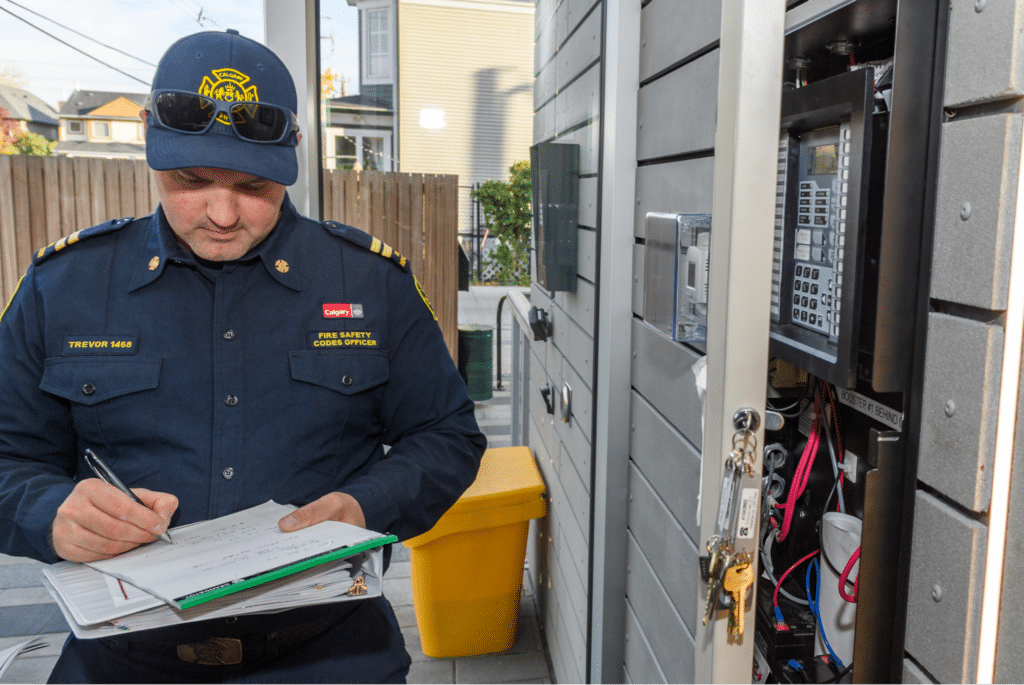
- Fire Safety Plan: Hosts must provide a compliant fire safety plan showing important safety information, including exits, smoke alarms, carbon monoxide detectors, fire extinguishers, and evacuation procedures.
- Fire Inspection: New Primary Residence and Non-Primary Residence applications require a fire inspection before the licence can be issued.
- Liability Insurance: Short-term rental operators must have liability insurance that specifically references short-term rental or home-sharing use, with a minimum of $2 million in liability coverage from an insurer registered in Alberta.
- Maximum Occupancy: Hosts cannot allow more than two individuals per room.
- No Overlapping Bookings: Hosts cannot have overlapping bookings for the same dwelling. Separate rooms cannot be rented to different guests under separate simultaneous reservations.
- Licence Number in Advertising: The short-term rental business licence number must appear in advertising for the property.
- 24-Hour Emergency Contact: Hosts must post the name, phone number, and email address of an emergency contact who can be reached 24 hours a day.
- Guest Records: Hosts must maintain permanent electronic guest records containing required information, including the full name and email address of paid guests and the duration of their stay.
These requirements are designed to protect guests, property owners, neighbours, and the broader Calgary community.
Licensing Costs and Categories for Calgary Short-Term Rentals
Calgary’s 2026 Business Licence Fee Schedule establishes different fees for Primary Residence and Non-Primary Residence short-term rentals.
The current 2026 fees are:
- Primary Residence: $172 for a new licence.
- Primary Residence Renewal: $131.
- Non-Primary Residence: $510 for a new licence.
- Non-Primary Residence Renewal: $260.
- Fire Inspection: $117 for applicable new and renewal STR licences.
- Short-Term Rental Company Licence: $3,000 annually.
This means the listed City fees for a new application are currently:
- Primary Residence: $289 including the $117 fire inspection fee.
- Non-Primary Residence: $627 including the $117 fire inspection fee.
The $3,000 Short-Term Rental Company Licence is a separate category applying to businesses that facilitate or broker short-term rental reservations, such as digital rental platforms. It is not a $3,000 fee that every individual Airbnb host must pay.
Fees can change in future years, so property owners should always verify the current City fee schedule before applying.
👉 Check the City of Calgary’s current short-term rental licence requirements.
Revised Airbnb Regulations in Calgary
Calgary introduced significant amendments to its short-term rental regulations effective April 1, 2025.
These changes were designed to balance short-term rental activity with housing availability, guest safety, community impact, and regulatory enforcement.
Primary and Non-Primary Residence Licences
Calgary now issues short-term rental licences according to whether the property is a Primary Residence or Non-Primary Residence.
This replaced the previous licensing structure based on the number of rooms being rented.
The distinction recognizes that non-primary residences may operate more like commercial accommodation businesses.
Conditional Moratorium on New Non-Primary Residence Licences
Calgary approved a mechanism that allows the City to temporarily pause issuing new Non-Primary Residence licences if the city’s Purpose-Built Rental Vacancy Rate falls below 2.5%.
Importantly, this moratorium is not currently in effect.
The City’s current information states that the mechanism was not triggered based on the applicable vacancy rate, and if the rate falls below 2.5% in the future, the temporary pause would apply to new non-primary residence applications. It would not apply to new Primary Residence applications or existing licences.
For property owners considering purchasing an investment property specifically for short-term rental purposes, this is an important rule to monitor.
Short-Term Rentals Can Now Include Stays Up to 180 Days
Calgary expanded the definition of a short-term rental to include stays of up to 180 consecutive days.
The change was intended to address the emerging medium-term rental market and provide the City with greater regulatory oversight.
If you offer furnished accommodation for periods longer than a traditional vacation stay, you should determine whether your rental falls within Calgary’s current short-term rental definition.
Affordable Housing Restrictions
Calgary does not issue short-term rental business licences for homes designated as affordable housing.
This restriction is intended to protect affordable housing from being converted into commercial short-term accommodation.
Digital Rental Platforms
Calgary also created a new Short-Term Rental Company Licence category.
Businesses that facilitate or broker short-term rental reservations through the internet, including platforms such as Airbnb and Vrbo, fall within this category and are subject to a $3,000 annual licence fee.
Short-Term Rental Business Licence Requirements – City of Calgary
Before applying for a short-term rental business licence, property owners need to make sure their property meets the City’s requirements.
Depending on the property, the application process can require:
- Proof of property ownership or authorization from the owner.
- Primary residence identification, where applicable.
- Fire Safety Plan.
- Fire inspection.
- Smoke and carbon monoxide detectors.
- Fire extinguishers.
- Emergency and evacuation information.
- $2 million minimum liability insurance that references short-term rental or home-sharing use.
- Required permits and approvals.
- Secondary suite registration, where applicable.
- Compliance with condominium bylaws, where applicable.
For a new Primary Residence or Non-Primary Residence application, the required fire inspection must be completed before the business licence can be issued.
👉 Review the City of Calgary’s short-term rental application requirements.
Fire Safety Requirements for Calgary Airbnb Hosts
Fire safety is one of the most important parts of Calgary’s short-term rental licensing process.
A compliant Fire Safety Plan must include information such as:
- The property address.
- Room designations.
- Accessible floors.
- Fire exits.
- Evacuation procedures.
- Emergency meeting location.
- Emergency contact information.
- Exit windows.
- Doors.
- Smoke alarms.
- Carbon monoxide detectors.
- Fire extinguishers.
- Primary and secondary exit paths from bedrooms.
- A legend explaining the symbols used on the plan.
Hosts should also understand that the City’s requirements can extend beyond simply installing smoke detectors.
The property needs to be prepared to meet the applicable life-safety requirements before the fire inspection.
Enhanced Accountability, Safety, and Community Impact
Calgary’s regulations place significant emphasis on responsible short-term rental operations.
The City requires hosts to follow specific operating rules designed to reduce safety concerns and community impacts.
These include:
- Maximum of two individuals per room.
- No overlapping bookings.
- Licence number displayed in advertising.
- 24-hour emergency contact information.
- Permanent electronic guest records.
- Required fire safety measures.
- Appropriate liability insurance.
These requirements mean that successfully operating a Calgary Airbnb involves considerably more than creating a listing and accepting reservations.
Airbnb Regulations in Calgary Secondary Suites
Secondary suites can be an attractive option for Calgary property owners, but they have additional requirements.
If you’re planning to operate a secondary suite as a short-term rental, the suite must be registered with the City before applying for the short-term rental business licence.
Important considerations include:
- Suite Registration: The secondary suite must be registered with the City before applying for the STR licence.
- Safety Requirements: The property must meet applicable fire and life-safety requirements.
- Business Licensing: A short-term rental business licence is required.
- Property Requirements: Required permits and approvals must be in place.
- Condominium Rules: If the property is located within a condominium, the owner must comply with applicable condo bylaws.
👉 Learn more about Calgary Secondary Suites.
Critical Regulations for Airbnb Rental Hosts in Calgary
Operating an Airbnb or other short-term rental in Calgary requires attention to several important areas.
- Business Licence: A valid short-term rental business licence is required.
- Fire Inspection: New STR licence applications require the applicable fire inspection before the licence can be issued.
- Insurance: Minimum $2 million liability coverage is required, with the insurance referencing short-term rental or home-sharing use.
- Fire Safety Plan: A compliant plan must be prepared and maintained.
- Occupancy: No more than two individuals may occupy a room.
- Overlapping Bookings: Separate simultaneous bookings for the same dwelling are not permitted.
- Advertising: The City’s business licence number must appear in short-term rental advertising.
- Emergency Contact: A 24-hour emergency contact must be posted in a conspicuous location.
- Guest Records: Required electronic guest records must be maintained and provided to the Chief Licence Inspector upon demand.
- Secondary Suites: Suites used for short-term rentals must be registered with the City.
- Condominium Bylaws: Owners remain responsible for complying with applicable condo bylaws.
- Affordable Housing: The City will not issue STR licences for homes designated as affordable housing.
Fines for Non-Compliance
Calgary takes short-term rental compliance seriously.
The City states that failing to follow several specific short-term rental regulations can result in a $1,000 fine upon conviction for each offence.
Examples include:
- Offering a room without a window.
- Allowing guests to sleep in a room without a window.
- Allowing more than two adults per room.
- Having overlapping bookings.
- Failing to include the licence number in advertising.
- Failing to post emergency contact information.
- Failing to maintain required guest records.
- Failing to provide records when requested by the Chief Licence Inspector.
The City says its approach is to pursue voluntary compliance whenever possible, but hosts should not assume that violations will simply be overlooked.
👉 Review the City of Calgary’s current short-term rental rules and regulations.
Calgary Short-Term Rental Bylaw Changes Since January 2024
Some Calgary short-term rental requirements were strengthened beginning January 1, 2024.
These changes introduced requirements including:
- Fire safety plans.
- Proof of ownership or owner consent.
- Fire inspections.
- Insurance documentation.
- Additional accountability and safety requirements.
However, these were not the latest major changes.
The most significant subsequent changes took effect on April 1, 2025, introducing the Primary Residence and Non-Primary Residence licence categories, expanding the short-term rental definition to 180 days, introducing the conditional non-primary-residence moratorium, creating the Short-Term Rental Company licence, removing City-required condo board consent, and restricting STR licences in affordable housing.
This distinction is important because many online articles still discuss Calgary’s regulations as they existed in 2023 or early 2024.
👉 For the most current information, always check the City of Calgary’s official short-term rental regulations.
Bylaw Changes for Calgary Short-Term Rentals Like Airbnb and Vrbo
Calgary’s current regulatory framework focuses on several key areas:
- Enhanced Safety: Ensuring short-term rental properties meet required safety standards.
- Community Impact: Addressing issues such as overcrowding and disturbances.
- Housing Availability: Monitoring the potential impact of non-primary residence STRs on Calgary’s housing supply.
- Licensing: Separating Primary Residence and Non-Primary Residence licences.
- Accountability: Requiring licence numbers in advertising and maintaining guest records.
- Platform Oversight: Licensing businesses that facilitate or broker short-term rental reservations.
- Enforcement: Providing specific penalties for violations.
For property owners, staying informed is an important part of operating a successful short-term rental business.
Technological Solutions for Airbnb Hosts
Technology has become an increasingly important part of managing a successful short-term rental.
Professional property managers can use technology to streamline many aspects of the guest and owner experience.
Some of the most useful tools include:
- Property Management Software: Manages reservations, calendars, listings, and guest communication.
- Revenue Management Tools: Helps analyze market conditions and optimize nightly rates.
- Automated Guest Communication: Provides booking confirmations, check-in instructions, reminders, and checkout information.
- Digital Access Solutions: Makes guest check-in and property access more convenient.
- Maintenance Management: Helps identify, assign, and track maintenance issues.
- Performance Reporting: Gives property owners information about occupancy, revenue, expenses, and rental performance.
Technology doesn’t replace good property management — it allows a professional management operation to work more efficiently.
How Maple Luxury Stays Helps Calgary Property Owners
Managing a short-term rental can quickly become a second job.
Between creating listings, responding to guests, coordinating cleaners, managing maintenance, adjusting prices, monitoring reviews, and keeping up with changing regulations, there is a lot happening behind the scenes.
That’s where Maple Luxury Stays can help.
Our goal is to provide Calgary property owners with a professional and streamlined approach to short-term rental management.
Our services can include:
- Professional property marketing.
- Revenue and pricing management.
- Guest communication.
- Booking management.
- Professional housekeeping coordination.
- Property inspections.
- Maintenance coordination.
- Guest experience management.
- Owner reporting.
By combining local expertise, technology, hospitality, and professional property management, Maple Luxury Stays helps property owners spend less time managing their rental and more time enjoying the benefits of property ownership.
👉 Learn more about Maple Luxury Stays.
Understanding Calgary Airbnb Regulations
Navigating Calgary’s short-term rental regulations can feel complicated, particularly as the City’s rules continue to evolve.
In this article, we’ve covered:
- The current 2026 licensing requirements for Calgary short-term rentals.
- The difference between Primary Residence and Non-Primary Residence licences.
- Current 2026 licence and fire-inspection fees.
- Fire safety and inspection requirements.
- The $2 million liability insurance requirement.
- Occupancy and overlapping-booking rules.
- Advertising and licence-number requirements.
- Emergency contact and guest-record requirements.
- Rules affecting secondary suites.
- The conditional 2.5% vacancy-rate moratorium.
- Restrictions involving affordable housing.
- Current penalties for non-compliance.
- How professional property management can help.
For property owners, compliance should be the foundation of a successful short-term rental business.
But compliance is only one part of the equation.
Maximizing occupancy, setting competitive pricing, delivering an exceptional guest experience, maintaining the property, managing bookings, and responding to guests all require time and expertise.
That’s why many Calgary property owners choose to work with a professional short-term rental management company.
If you own a property in Calgary and are considering Airbnb or another short-term rental platform, Maple Luxury Stays can help you manage the day-to-day responsibilities of operating a professional vacation rental.
👉 Contact Maple Luxury Stays to learn more about professional Calgary short-term rental management.